
Is My Child Ready For Kindergarten? What You Need to Know
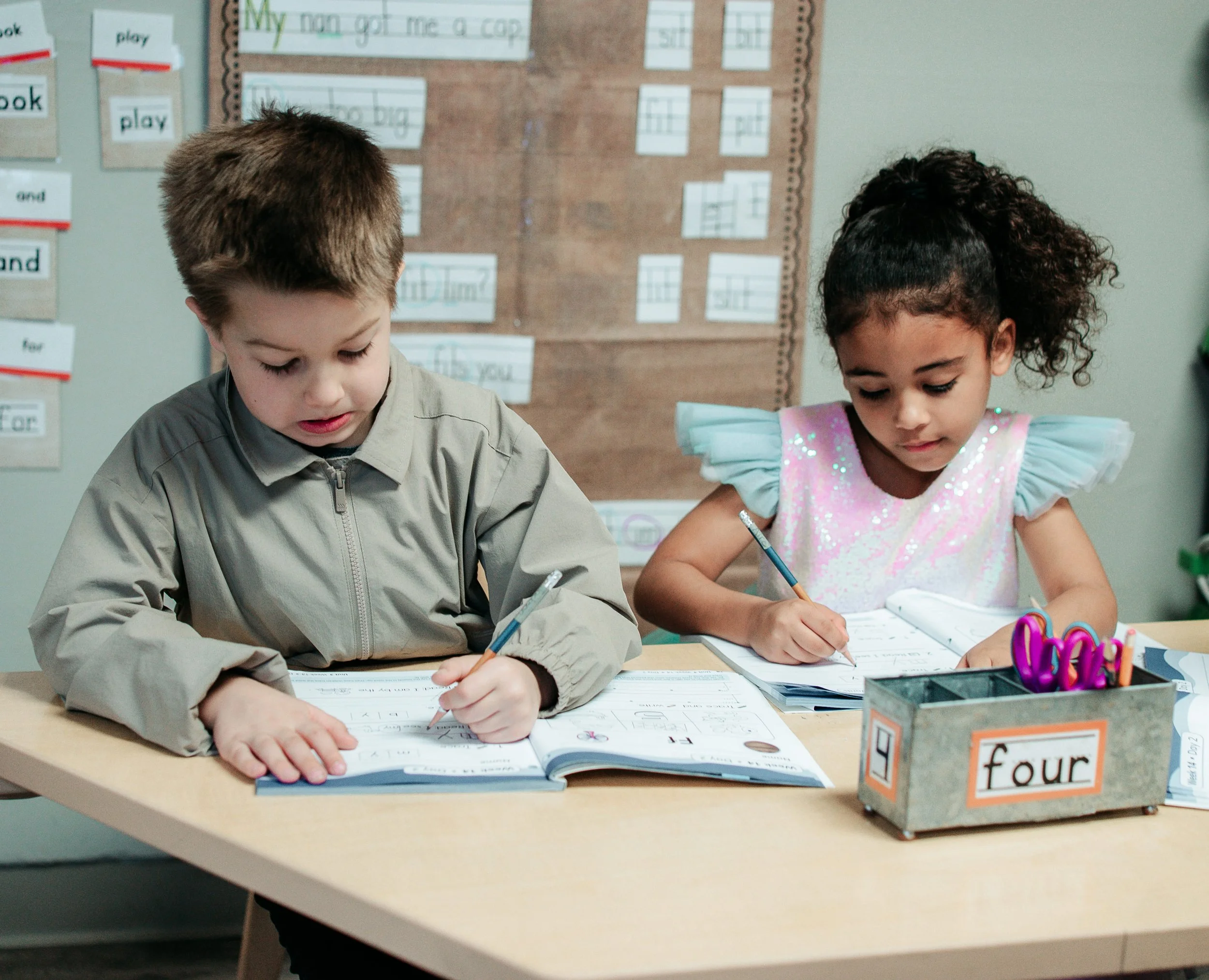
There’s a moment virtually every parent experiences before kindergarten begins: you look at your child and wonder, “Are they ready for this?”
Maybe they can already recognize letters and numbers. Maybe they’re still working on being separated at drop-off. They’re wildly curious, deeply sensitive, incredibly social, or happiest when building forts out of couch cushions. Kindergarten readiness is a combination of emotional, social, physical, and cognitive development that helps children feel confident stepping into a school environment.
And most importantly: readiness doesn’t look exactly the same for every child.
Children thrive when they’re supported in an environment conducive to growth. A child’s curiosity, confidence, resilience, creativity, and sense of belonging matter just as much as early academic skills. Kindergarten is the beginning of a child learning how they move through the world, build relationships, and discover themselves as learners.
Does Completing Preschool Automatically Mean a Child Is Ready for Kindergarten?
Preschool completion and kindergarten readiness are related, but they are not the same thing. Preschool can provide valuable opportunities to practice routines, social interaction, language development, and independent skills. Many children who attend preschool enter kindergarten with experience and confidence following group directions, participating in classroom activities, and separating from caregivers.
However, completing preschool does not automatically mean a child is ready for kindergarten. Children develop at different rates, and readiness depends on a combination of skills. In California, public-school kindergarten eligibility is based primarily on age requirements set by the state, not on whether a child attended preschool. Private schools are not required to follow the same public-school enrollment guidelines, but many consider similar developmental factors when evaluating kindergarten placement and readiness.
What If a Child Did Not Attend Preschool?
Many children who did not attend formal preschool are still ready for kindergarten. Readiness can develop through everyday experiences at home, in childcare settings, with relatives, in community programs, or through regular social activities.
When a child has not attended preschool, it can be helpful to focus on comfort with routines, communication, social interaction, and confidence in new environments.
Here are some thoughtful questions to consider:
Is my child beginning to show the developmental skills that help children participate successfully in a kindergarten classroom?
Has my child begun following routines?
Has my child worked on communicating their needs?
Does my child engage with peers?
Does my child approach learning with curiosity?
What Does “Kindergarten Readiness” Mean?
Kindergarten readiness refers to the collection of developmental skills that help children participate successfully in a classroom environment.
That includes areas like:
Communication skills
Emotional regulation
Social interaction
Independence
Physical coordination
Early literacy and math awareness
Curiosity and willingness to try new things
In recent years, conversations around kindergarten readiness have expanded beyond memorizing letters or counting to 100. Educators increasingly recognize that emotional development, adaptability, and confidence are foundational for long-term learning success.
In other words, a child who feels safe, connected, and capable is often more prepared to learn than a child who can recite the alphabet but struggles to participate in a group setting.
Signs Your Child May Be Ready for Kindergarten
Every child develops differently, but there are common indicators families can look for when considering kindergarten readiness.
They can follow simple routines
Kindergarten classrooms involve transitions throughout the day: unpacking backpacks, joining circle time, washing hands, cleaning up materials, and moving between activities. A kindergarten-ready child does not need to manage every task perfectly, but they should begin to understand routines and participate with increasing independence.
You might notice your child can:
Follow 2 to 3 step directions
Help clean up after activities
Transition between tasks with support
Participate in group routines
They’re beginning to communicate their needs
Children entering kindergarten are still learning emotional regulation and communication. What matters is progress.
Your child may be ready if they can:
Express basic needs verbally
Ask for help when needed
Use words more often than physical reactions
Begin identifying feelings like sadness, frustration, or excitement
Strong communication skills help children build relationships with teachers and peers while developing confidence in the classroom.
They can spend time with peers
Social development plays a major role in kindergarten readiness. A child doesn’t need to be outgoing or instantly comfortable in every group setting. Instead, look for signs that your child is beginning to:
Play cooperatively with others
Practice sharing and taking turns
Participate in group activities
Develop friendships or social curiosity
They show curiosity and engagement
Curiosity is one of the strongest indicators of readiness for learning. Children who ask questions, explore ideas, tell stories, build imaginary worlds, or show excitement about discovering something new are already developing important learning habits.
Readiness can look like:
Asking “why” questions
Enjoying books and storytelling
Exploring through play
Trying new activities
Showing interest in the world around them
At progressive schools, curiosity is part of the learning.
Does My Child Need To Know How To Read Before Kindergarten?
This is one of the most common questions families ask, and the answer is no. Most kindergarten programs are designed to help children develop early literacy skills. What matters most is exposure to language and positive experiences around communication and books.
Helpful early literacy experiences include:
Listening to stories
Recognizing some letters
Singing songs and rhymes
Talking about pictures in books
Hearing and using new vocabulary
Children learn at different rates, and early reading ability alone is not a measure of future success.
What if My Child Is Shy, Emotional, or Highly Sensitive?
Many thoughtful, observant, creative children enter kindergarten cautiously. Some children need more time to warm up socially, and others experience big emotions during transitions or unfamiliar situations. These traits are not necessarily signs that a child is unprepared. In fact, sensitivity often comes with deep empathy, imagination, and emotional awareness.
The goal is not to eliminate these traits; it’s to support children in developing tools, confidence, and trusting relationships so they can navigate new experiences successfully.
How Can Families Support Kindergarten Readiness at Home?
Kindergarten readiness grows through everyday experiences. Simple routines and meaningful connections support development more effectively than intensive academic preparation. Families can help by:
Encouraging independence
Invite children to practice:
Putting on shoes and jackets
Cleaning up toys
Opening snack containers
Carrying backpacks
Using the bathroom independently
These small moments build confidence.
Prioritizing play
Play supports problem-solving, communication, creativity, emotional regulation, and social development. Unstructured playtime remains one of the most valuable forms of learning for young children.
Reading together regularly
Shared reading builds language skills, attention span, imagination, and emotional connection. Even a few minutes of reading together each day can have a lasting impact.
Talking through emotions
Helping children name feelings and navigate challenges builds emotional resilience.
Simple phrases like:
“You seem frustrated.”
“That felt disappointing.”
“What could we try next?”
These phrases help children develop self-awareness and coping skills.
Kindergarten Readiness Looks Different for Every Child
It can be tempting to compare children or focus on milestones that feel easiest to measure, but readiness is not about creating a perfectly polished child before school begins. It’s instead about helping children feel capable, connected, curious, and supported as they step into a new environment.
At Hollywood Schoolhouse, kindergarten is designed to meet children where they are while encouraging them to grow. Through hands-on exploration, meaningful relationships, creative expression, and inquiry-based learning, children are invited to ask questions, share ideas, and develop confidence as learners. Our program nurtures independence, collaboration, problem-solving, and a genuine love of learning.
We believe children learn best when they feel known, valued, and free to grow at their own pace. Kindergarten readiness is not about rushing childhood; it’s about honoring development while building a strong foundation for joyful learning ahead. Want to see how Hollywood Schoolhouse supports kindergarten readiness through joyful learning, emotional development, and growth? Reach out to schedule a tour and experience firsthand how children are encouraged to build confidence, curiosity, and connection from the very beginning.
FAQs
-
In California, children typically begin kindergarten around age 5, though eligibility deadlines may vary by year and district.
-
Social-emotional development, communication, independence, curiosity, and the ability to participate in routines are often considered just as important as academic skills.
-
Yes, many children enter kindergarten with a wide range of literacy skills. Kindergarten is designed to support early reading development.
-
This is very common. With gentle preparation, consistent routines, and supportive environments, children gradually build confidence with transitions.
-
Children who are beginning to express feelings, recover from small frustrations with support, and participate in group experiences are often building important emotional readiness skills.
